

Fed Rate Cut Opens Door for Asian Central Banks Amid Trade Pressures
The U.S. Federal Reserve’s recent 25 basis points interest rate cut, with expectations of two more reductions this year, has opened a window for Asian central banks to adjust policies amid trade tensions and slowing global growth.
While the Fed navigates inflation risks, several Asian economies enjoy lower inflation and stable growth, suggesting they could adopt a more extended, accommodative rate cut cycle, particularly with the U.S. dollar weakening.
Fed’s Move and Its Ripple Effect
On Wednesday, the Fed reduced its benchmark overnight lending rate to 4%–4.25%, describing the adjustment as a “risk management cut” rather than a response to a weak economy. Fed Chair Jerome Powell indicated that two additional rate cuts are likely this year.
The decision may narrow the gap between U.S. and Asian bond yields, alleviating currency concerns. According to Peiqian Liu, Asia economist at Fidelity International, this adjustment provides Asian economies, particularly those facing domestic challenges, greater room to ease rates.
“The overall policy stance across the region will likely become more accommodative,” Liu noted.
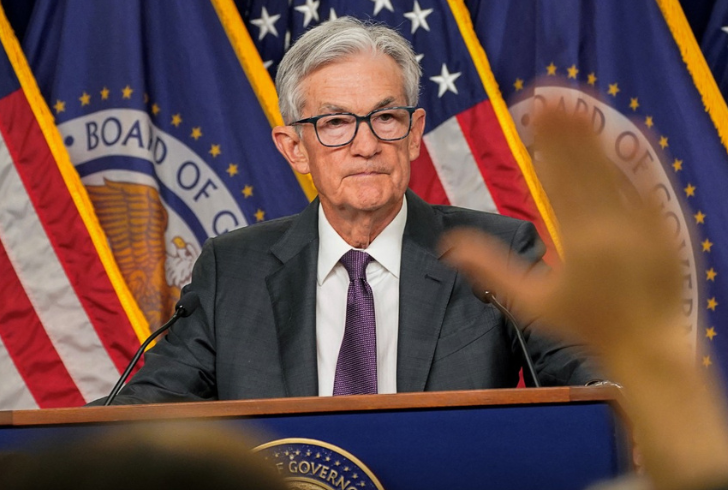
Instagram | meritstreetmedia | The Fed lowered rates to 4%-4.25% for “risk management,” with Chair Powell hinting at two more cuts.
Some Asian banks have already moved ahead of the Fed to mitigate impacts from previous U.S. tariffs. The Bank of Korea cut its policy rate to an almost three-year low in May. The Reserve Bank of Australia followed with a two-year low in August. Meanwhile, India delivered a larger 50 basis points reduction in June.
Differences among countries persist due to domestic inflation levels and export conditions, as Liu highlights. Some nations had rushed exports before U.S. tariffs took effect, influencing their current economic stance.
Regional Responses and Growth Factors
Export-driven economies such as Japan, South Korea, and Singapore showed stronger-than-expected growth in Q2, with Seoul and Singapore narrowly avoiding a technical recession. Central banks in these regions, including the Bank of Korea and Reserve Bank of India, may continue easing in the fourth quarter.
Betty Wang, lead economist at Oxford Economics, emphasized that earlier worries about rapid currency depreciation were overstated. A softer dollar now allows Asian central banks to address growth concerns with more flexibility. Chi Lo, senior market strategist at BNP Paribas Asset Management, noted that real interest rates in much of Asia remain above historical averages, providing further room for cuts.
India remains an exception, driven by robust domestic demand. Fidelity’s Liu expects India to focus on sustaining internal growth amidst weaker external demand and higher U.S. tariffs. August inflation rose to 2.07%, slightly above the RBI’s lower target range, signaling space for additional easing if needed.
Contrasting Approaches

Instagram | cnbcinternational | The Bank of Japan is holding rates steady but plans to normalize policy as inflation rises.
Two major Asian economies are resisting the trend of rate cuts. Japan’s central bank is maintaining rates, with plans to gradually normalize monetary policy. Economists expect steady rates at upcoming meetings, with potential hikes later this year as inflation consistently exceeds the 2% target.
China also kept its short-term rate at 1.4% following the Fed’s cut. Authorities are balancing stimulus needs against the risk of reigniting a stock market bubble similar to 2015. Signs of economic fatigue have emerged, including slowing export growth and weaker retail sales and industrial output.
The yuan has strengthened amid the dollar’s decline, with the offshore yuan rising roughly 3% this year to trade at 7.1083. Tianchen Xu, senior economist at the Economist Intelligence Unit, expects the yuan to reach seven by year-end as Beijing manages deflation risks and supports growth. The Fed’s move still provides China with options for medium-term monetary easing.
Asia’s Outlook After the Fed Rate Cuts
The Fed’s rate cuts set the stage for a potentially longer easing cycle in Asia, supported by resilient growth, low inflation, and a weaker dollar.
Central banks across the region are expected to respond selectively, taking into account domestic conditions, export dependencies, and currency trends. While countries like India, South Korea, and Australia may continue to ease, China and Japan are likely to maintain or gradually adjust their rates, reflecting their unique economic dynamics.
Asian markets now face a nuanced landscape: opportunities for growth support via lower rates exist, but careful monitoring of inflation, currency stability, and global trade pressures remains essential.
The Fed’s actions have introduced flexibility, and policymakers in the region are poised to navigate this shifting environment with measured responses.
More in Business
-
`
 Kendall Jenner’s Green Olive Activewear Is This Fall’s Must-Have Shade
Kendall Jenner has once again shown how a single color can define a season. The supermodel, widely recognized for her influence...
September 20, 2025 -
`
 Why Denzel Washington Doesn’t Watch Movies Anymore
Denzel Washington, a two-time Academy Award winner with a career spanning decades, recently made a revelation that caught many off guard....
September 13, 2025 -
`
 Brian Cornell Exits as Target CEO, Michael Fiddelke to Lead Next Chapter
Target is preparing for a major leadership change. Brian Cornell, who has led the company for nearly a decade, will step...
September 6, 2025 -
`
 Redefining Wealth Management for a Multi-Generational Future
Wealth today is no longer just about financial capital. It represents values, priorities, and the vision families carry into the future....
August 30, 2025 -
`
 Can Lifestyle Changes Improve Your Cognitive Health?
For years, scientists have tied healthy living to stronger brain performance. Now, the 2025 POINTER trial adds new evidence, showing that...
August 23, 2025 -
`
 Jason Momoa Shocks Fans With Clean-Shaven Look for ‘Dune 3’
Jason Momoa has officially said goodbye to his signature beard—and it’s for a role that fans have been eagerly anticipating. The...
August 15, 2025 -
`
 Why Fast Growth Can Hurt Your Business More Than Help It
Scaling a business is exciting. Growth means progress, more customers, and broader influence. But pushing too hard, too fast can pull...
August 10, 2025 -
`
 2 Game-Changing Stocks That Could Build Generational Wealth
There’s no shortage of investment ideas in the market. But every once in a while, a few names emerge that offer...
August 3, 2025 -
`
 This Influencer’s Active Videos Inspire, But Offline She Battles a Painful Condition
Aurora McCausland appears full of energy across her TikTok and Instagram feeds. With over 300,000 followers, she’s seen dancing through her...
July 27, 2025
More From AfternoonEdition
-
 Decoding Harry Style’s New Album “Kiss All the Time. Disco, Occasionally.”
Harry Styles rarely repeats himself. Each album opens a new door, and his fourth record proves that habit still holds. “Kiss...
EntertainmentMarch 28, 2026 -
 Why Major UK High Street Businesses Are Going Cashless
Cash still jingles in pockets across the UK, but its place on the high street is shrinking. A new survey published...
BusinessMarch 21, 2026 -
 How Singapore’s Wealthy Elite Owns One-third of Total Household Wealth
Singapore is famous for its sleek skyline, booming finance sector, and strong economic growth. Yet behind that success sits a sharp...
WealthMarch 13, 2026 -
 BBC to Celebrate Broadcasting Icon David Attenborough’s 100th Birthday
The BBC is preparing a major tribute to one of its greatest voices. Sir David Attenborough turns 100 on 8 May,...
LifestyleMarch 7, 2026 -
 Why the “Dancing With the Stars” TV Show Is Reinventing Itself
A new chapter is starting for the Dancing With the Stars franchise. This time, the spotlight is not on celebrities chasing...
EntertainmentFebruary 26, 2026
You must be logged in to post a comment Login