

Google Co-Founders Flee California As Bernie Sanders-endorsed ‘Billionaire Tax’ Looms
California has always sold itself as the land of big ideas and bigger fortunes. Now it is testing how much wealth it can hold before it slips away. The proposed 2026 Billionaire Tax Act has turned into a flashpoint, and some of the state’s richest residents are already acting.
Google co-founders, Larry Page and Sergey Brin, did not wait for election night. Reports show both Google co-founders are reshaping their financial footprints as the tax inches closer to the ballot. The message is clear. When the rules change, even tech legends rethink where they call home.
The Tax Targets the Ultra-rich
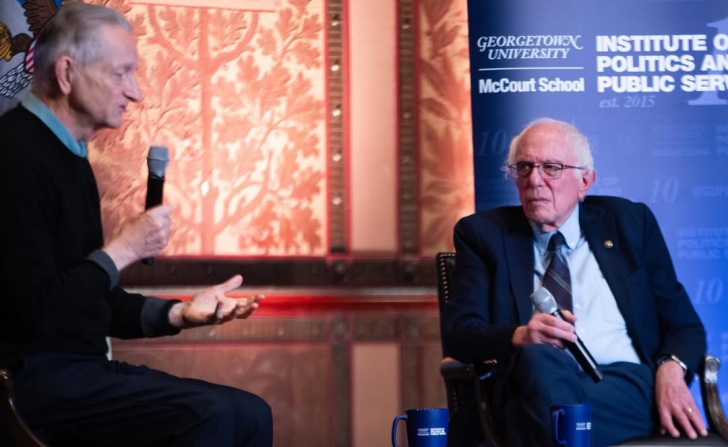
Sanders / IG / The proposed tax says that any California resident with a net worth above $1 billion would face a one-time 5% tax.
However, the catch is timing. If voters approve it in November 2026, it applies retroactively to anyone who lived in the state on January 1, 2026.
That retroactive clause has rattled nerves. Wealth is not just cash in a bank account. It includes stocks, bonds, and business stakes, even if those assets have not been sold. Primary homes are excluded, and art under $5 million gets a pass, but most high-end holdings stay on the table. The state would allow payment over five years, yet the bill could still reach billions for a single person.
Supporters say the goal is urgent and moral. The Service Employees International Union-United Healthcare Workers West is leading the charge. They argue the tax could raise up to $100 billion. About 90% would go to healthcare programs, with the rest funding food assistance and education.
In their view, this is a direct response to federal healthcare cuts and a fair ask from those who have gained the most.
Why Page and Brin Are Quietly Pulling Back
Boli / Unsplash / Google co-founders are reshaping their financial footprints as the tax inches closer to the ballot.
Many were shifted to Delaware, Nevada, Florida, and Texas. These were not shell companies. They included his family office and major investment vehicles.
Sergey Brin followed a similar path. An entity tied to him relocated or dissolved 15 California LLCs, moving them to Nevada just days before Christmas. The timing raised eyebrows. These moves came well before voters get a say, signaling a preemptive strike rather than a symbolic protest.
Real estate tells another part of the story. Page bought two waterfront estates in Miami for a combined $173.4 million. A trust linked to him also picked up a $71.9 million mansion in the same area. While both founders still own California homes, these Florida purchases look less like vacation spots and more like anchors. Florida has no state income tax and no appetite for wealth taxes.
The billionaire tax has exposed deep cracks within California’s Democratic Party. Progressive lawmakers and labor groups frame it as common sense. They point out that U.S. billionaires see average annual wealth growth of about 7.5%. In that light, a one-time 5% tax looks modest. Even after paying, most fortunes would keep growing.
The Billionaire Tax Has Put Stakeholders in Jeopardy
High-profile voices have joined the chorus. Senator Bernie Sanders has praised the idea as a model for the nation. Representative Ro Khanna backs it too, calling it a fair way to fund healthcare for working families. For supporters, this is not about punishment. It is about priorities.
Opponents see it very differently. Many tech leaders warn that the tax will drive money, jobs, and innovation out of California. Venture capital figures like David Sacks and Reid Hoffman have used blunt language, calling the proposal extreme and destructive. Their biggest fear centers on taxing unrealized gains. Founders could owe massive sums based on the stock value they have not cashed out.
More in Business
-
`
 Kendall Jenner’s Green Olive Activewear Is This Fall’s Must-Have Shade
Kendall Jenner has once again shown how a single color can define a season. The supermodel, widely recognized for her influence...
September 20, 2025 -
`
 Why Denzel Washington Doesn’t Watch Movies Anymore
Denzel Washington, a two-time Academy Award winner with a career spanning decades, recently made a revelation that caught many off guard....
September 13, 2025 -
`
 Brian Cornell Exits as Target CEO, Michael Fiddelke to Lead Next Chapter
Target is preparing for a major leadership change. Brian Cornell, who has led the company for nearly a decade, will step...
September 6, 2025 -
`
 Redefining Wealth Management for a Multi-Generational Future
Wealth today is no longer just about financial capital. It represents values, priorities, and the vision families carry into the future....
August 30, 2025 -
`
 Can Lifestyle Changes Improve Your Cognitive Health?
For years, scientists have tied healthy living to stronger brain performance. Now, the 2025 POINTER trial adds new evidence, showing that...
August 23, 2025 -
`
 Jason Momoa Shocks Fans With Clean-Shaven Look for ‘Dune 3’
Jason Momoa has officially said goodbye to his signature beard—and it’s for a role that fans have been eagerly anticipating. The...
August 15, 2025 -
`
 Why Fast Growth Can Hurt Your Business More Than Help It
Scaling a business is exciting. Growth means progress, more customers, and broader influence. But pushing too hard, too fast can pull...
August 10, 2025 -
`
 2 Game-Changing Stocks That Could Build Generational Wealth
There’s no shortage of investment ideas in the market. But every once in a while, a few names emerge that offer...
August 3, 2025 -
`
 This Influencer’s Active Videos Inspire, But Offline She Battles a Painful Condition
Aurora McCausland appears full of energy across her TikTok and Instagram feeds. With over 300,000 followers, she’s seen dancing through her...
July 27, 2025
More From AfternoonEdition
-
 Decoding Harry Style’s New Album “Kiss All the Time. Disco, Occasionally.”
Harry Styles rarely repeats himself. Each album opens a new door, and his fourth record proves that habit still holds. “Kiss...
EntertainmentMarch 28, 2026 -
 Why Major UK High Street Businesses Are Going Cashless
Cash still jingles in pockets across the UK, but its place on the high street is shrinking. A new survey published...
BusinessMarch 21, 2026 -
 How Singapore’s Wealthy Elite Owns One-third of Total Household Wealth
Singapore is famous for its sleek skyline, booming finance sector, and strong economic growth. Yet behind that success sits a sharp...
WealthMarch 13, 2026 -
 BBC to Celebrate Broadcasting Icon David Attenborough’s 100th Birthday
The BBC is preparing a major tribute to one of its greatest voices. Sir David Attenborough turns 100 on 8 May,...
LifestyleMarch 7, 2026 -
 Why the “Dancing With the Stars” TV Show Is Reinventing Itself
A new chapter is starting for the Dancing With the Stars franchise. This time, the spotlight is not on celebrities chasing...
EntertainmentFebruary 26, 2026
You must be logged in to post a comment Login