
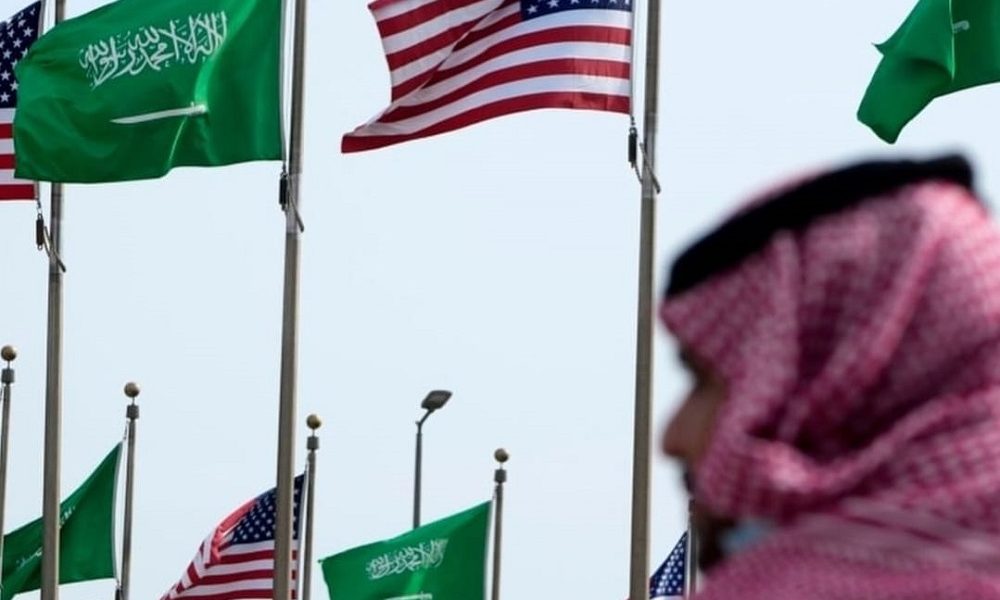
Has the Saudi Arabia Petrodollar Agreement With the U.S. Ended?
In the complex landscape of global finance, rumors and misinformation can spread faster than facts, leading to confusion about crucial economic agreements. A recent story claimed a seismic shift in the global economy, asserting that the Saudi Arabia petrodollar system had ended.
This claim suggests a pivotal change in how Saudi Arabia conducts its oil transactions, purportedly moving away from U.S. dollars—a cornerstone of global oil trade since the mid-20th century. However, the truth behind this claim is much less dramatic.
The Rumors of the 50-Year U.S.- Saudi Arabia Petrodollar Deal
Contrary to the swirling rumors, no formal 50-year agreement has bound Saudi Arabia to settle oil trades exclusively in U.S. dollars.
@aplasticplant | Instagram | No formal 50-year agreement has bound Saudi Arabia to settle oil trades exclusively in U.S. dollars.
This narrative seems to have been concocted to underline an anticipated decline in dollar dominance, perhaps to stir interest in alternatives like cryptocurrencies. David Wight, a historian who has extensively researched the petrodollar phenomenon, clarifies that his investigations into declassified documents reveal no such deal. Instead, what exists is a series of strategic financial relationships and policies enacted over decades.
Saudi-U.S. | Real Agreement With Different Stakes
The real deal between Saudi Arabia and the United States dates back to 1974, but it revolved around security and financial investments, not mandatory oil trading in dollars. The U.S. agreed to supply Saudi Arabia with advanced military technology.
In return, Saudi Arabia invested heavily in U.S. Treasury bonds, at one point reportedly owning up to 30% of the debt instruments. Today, the Kingdom holds about $136 billion in U.S. Treasuries, a stark decrease proportionate to the U.S.’s now nearly $35 trillion national debt.
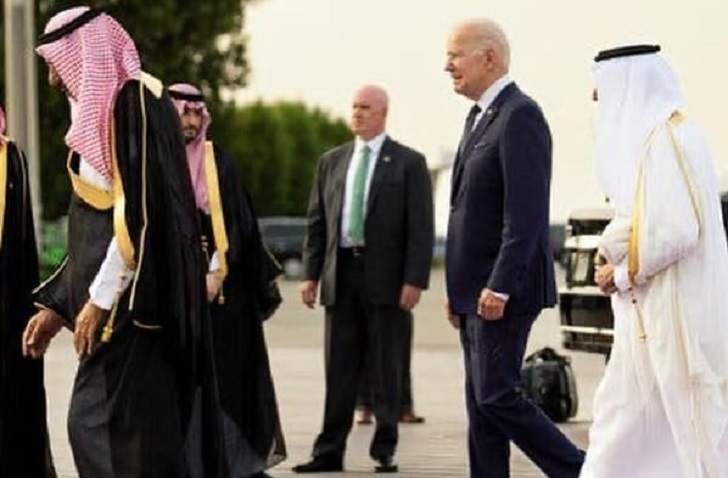
@aplasticplant | Instagram | The real deal between Saudi Arabia and the United States revolved around security and financial investments, not mandatory oil trading in dollars.
Why the Dollar Dominates Oil Transactions
The persistence of the U.S. dollar in oil transactions, and indeed in international trade at large, is not due to any single agreement but rather the dollar’s overwhelming prevalence in global finance. The dollar offers the most favorable exchange rates due to its wide use, reinforcing its position through what economists call a ‘network effect.’
According to the latest figures from the International Monetary Fund (IMF), the dollar comprises 58% of global foreign exchange reserves, underscoring its central role despite recent declines in its share.
Shifts in Global Currency Dynamics
jcomp | Freepik | The persistence of the U.S. dollar in oil transactions is not due to any single agreement but rather the dollar’s overwhelming prevalence in global finance.
While the Saudi Arabia petrodollar deal may be a myth, shifts in global currency use are real. For instance, Saudi Arabia’s participation in the mBridge project—a digital currency initiative involving several countries, including China, which does not currently support dollar transactions—indicates a diversifying financial landscape.
Moreover, with China becoming a major oil purchaser from Saudi Arabia, there’s increasing discussion about using currencies like the renminbi for oil transactions, especially as China encourages the use of its currency in international trade.
Saudi Arabia also engages with the BRICS group (Brazil, Russia, India, China, South Africa, Iran, Egypt, Ethiopia, and the United Arab Emirates), which advocates for using local currencies over the dollar in trade transactions. These moves suggest a gradual, albeit slow, shift towards less dollar-centric trade practices. Nonetheless, the Saudi Riyal’s peg to the dollar continues to incentivize the kingdom to maintain strong ties with the U.S. currency, which is crucial for its economic stability.
More in Wealth
-
`
 Has the Labubu Craze Finally Hit Its Breaking Point?
The rise of Labubu dolls has been nothing short of extraordinary. What started as a quirky character from a children’s book...
September 27, 2025 -
`
 Kendall Jenner’s Green Olive Activewear Is This Fall’s Must-Have Shade
Kendall Jenner has once again shown how a single color can define a season. The supermodel, widely recognized for her influence...
September 20, 2025 -
`
 Why Denzel Washington Doesn’t Watch Movies Anymore
Denzel Washington, a two-time Academy Award winner with a career spanning decades, recently made a revelation that caught many off guard....
September 13, 2025 -
`
 Brian Cornell Exits as Target CEO, Michael Fiddelke to Lead Next Chapter
Target is preparing for a major leadership change. Brian Cornell, who has led the company for nearly a decade, will step...
September 6, 2025 -
`
 Redefining Wealth Management for a Multi-Generational Future
Wealth today is no longer just about financial capital. It represents values, priorities, and the vision families carry into the future....
August 30, 2025 -
`
 Can Lifestyle Changes Improve Your Cognitive Health?
For years, scientists have tied healthy living to stronger brain performance. Now, the 2025 POINTER trial adds new evidence, showing that...
August 23, 2025 -
`
 Jason Momoa Shocks Fans With Clean-Shaven Look for ‘Dune 3’
Jason Momoa has officially said goodbye to his signature beard—and it’s for a role that fans have been eagerly anticipating. The...
August 15, 2025 -
`
 Why Fast Growth Can Hurt Your Business More Than Help It
Scaling a business is exciting. Growth means progress, more customers, and broader influence. But pushing too hard, too fast can pull...
August 10, 2025 -
`
 2 Game-Changing Stocks That Could Build Generational Wealth
There’s no shortage of investment ideas in the market. But every once in a while, a few names emerge that offer...
August 3, 2025
More From AfternoonEdition
-
 Decoding Harry Style’s New Album “Kiss All the Time. Disco, Occasionally.”
Harry Styles rarely repeats himself. Each album opens a new door, and his fourth record proves that habit still holds. “Kiss...
EntertainmentMarch 28, 2026 -
 Why Major UK High Street Businesses Are Going Cashless
Cash still jingles in pockets across the UK, but its place on the high street is shrinking. A new survey published...
BusinessMarch 21, 2026 -
 How Singapore’s Wealthy Elite Owns One-third of Total Household Wealth
Singapore is famous for its sleek skyline, booming finance sector, and strong economic growth. Yet behind that success sits a sharp...
WealthMarch 13, 2026 -
 BBC to Celebrate Broadcasting Icon David Attenborough’s 100th Birthday
The BBC is preparing a major tribute to one of its greatest voices. Sir David Attenborough turns 100 on 8 May,...
LifestyleMarch 7, 2026 -
 Why the “Dancing With the Stars” TV Show Is Reinventing Itself
A new chapter is starting for the Dancing With the Stars franchise. This time, the spotlight is not on celebrities chasing...
EntertainmentFebruary 26, 2026
You must be logged in to post a comment Login